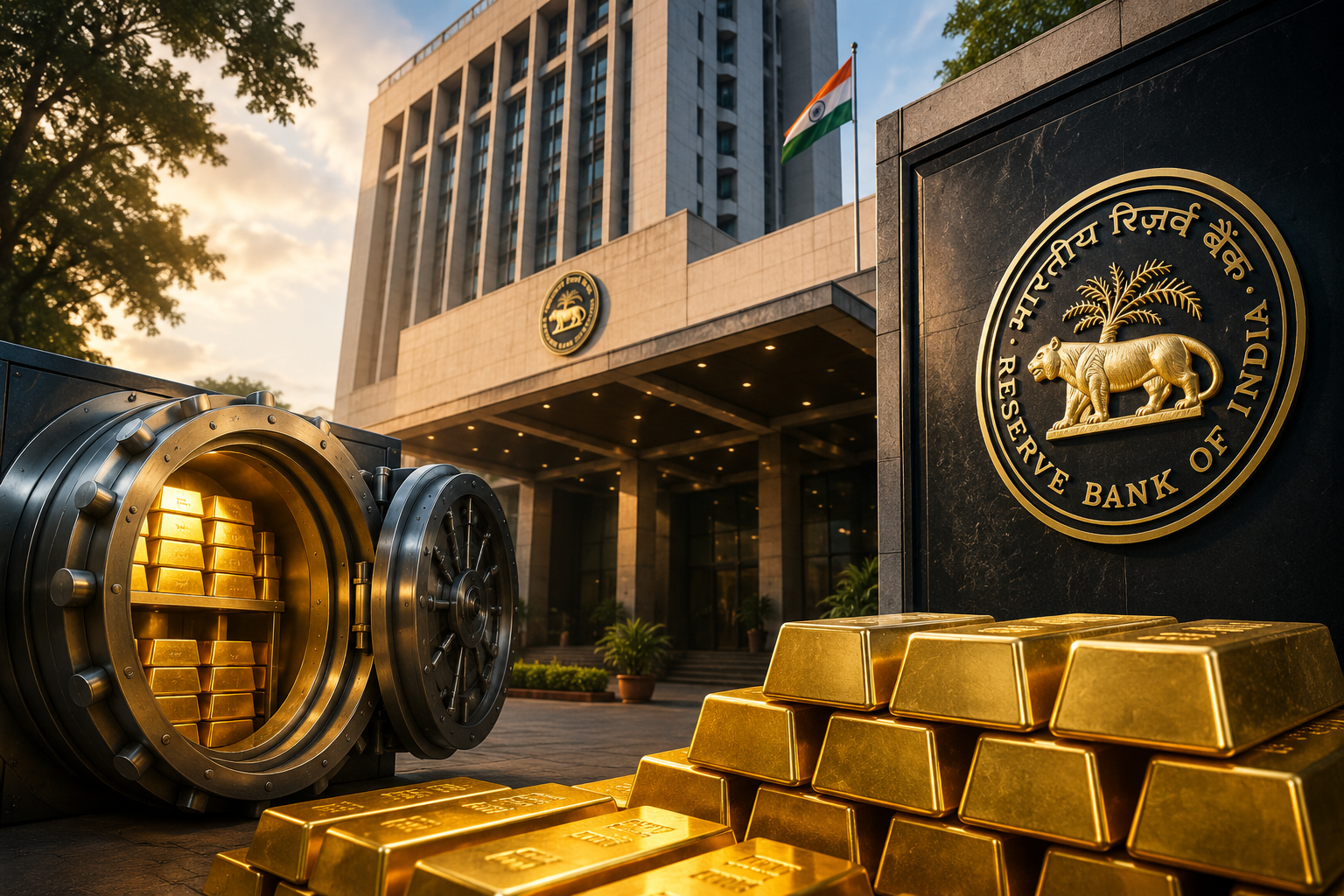
Recent reports and social media discussions sparked speculation that the Reserve Bank of India (RBI) had sold a portion of its gold reserves. The rumors quickly caught the attention of investors, economists, and market participants, raising concerns about India’s reserve management strategy. However, the RBI has now firmly denied these claims and clarified that its total gold holdings remain unchanged at 880.52 tonnes.
The clarification is significant because gold reserves play a crucial role in a country’s financial stability and are considered one of the most trusted assets held by central banks worldwide. At a time when global economies are facing geopolitical tensions, inflation concerns, and currency volatility, central banks continue to view gold as a strategic reserve asset.
Why Are Gold Reserves Important?
Gold has historically served as a store of value and a hedge against economic uncertainty. Unlike fiat currencies, gold is not directly tied to the economic policies of any single country, making it an attractive asset during periods of financial stress.
For central banks, gold reserves help:
- Diversify foreign exchange reserves.
- Reduce dependence on any single currency.
- Enhance confidence in the country’s financial position.
- Provide a buffer during global economic crises.
- Strengthen long-term monetary stability.
Because of these benefits, central banks around the world have been steadily increasing their gold holdings in recent years.
RBI’s Growing Gold Strategy
Over the past several years, the RBI has consistently added gold to its reserves as part of its diversification strategy. The move aligns with a broader global trend in which central banks are increasing gold allocations amid uncertainty surrounding global interest rates, inflation, and geopolitical developments.
India’s gold reserves have grown significantly over the last decade, reflecting the RBI’s focus on strengthening the country’s reserve portfolio. Maintaining a substantial gold reserve also supports investor confidence in India’s economic resilience.
What Led to the Rumors?
The speculation appears to have emerged from misinterpretations of reserve-related data and discussions surrounding reserve management practices. Some observers incorrectly assumed that changes in the location or accounting treatment of gold reserves indicated a sale of physical gold.
The RBI’s clarification confirms that no such sale took place and that the country’s gold holdings remain intact at 880.52 tonnes.
What Does This Mean for Investors?
The RBI’s statement reinforces the central bank’s confidence in gold as a strategic reserve asset. For investors, the clarification highlights an important point: despite advances in financial markets and digital assets, gold continues to play a critical role in reserve management at the highest institutional level.
The fact that the RBI has maintained its gold holdings suggests that the central bank continues to view gold as an important component of India’s long-term financial security and reserve diversification strategy.
The Bigger Picture
Globally, central banks have been among the largest buyers of gold in recent years. Rising geopolitical risks, concerns over currency fluctuations, and efforts to diversify reserves away from excessive dependence on any single currency have all contributed to increased demand for gold.
Against this backdrop, RBI’s confirmation that its gold holdings remain unchanged underscores India’s commitment to maintaining a strong and diversified reserve base.