Wall Street’s leading financial institutions have revised their oil price forecasts downward following a breakthrough agreement aimed at restoring normal shipping operations through the Strait of Hormuz, one of the world’s most strategically important energy corridors. The strait serves as a vital transit route for nearly 20% of global oil consumption, and fears of disruptions had previously pushed crude prices sharply higher. However, easing tensions in the Middle East and signs that oil exports can continue without major interruptions have prompted analysts to reassess the risk premium built into oil markets.
Major banks now expect global oil supplies to remain more stable than previously feared, reducing the likelihood of a sustained price spike. As a result, Brent crude prices have retreated from recent highs, with some analysts forecasting further declines if regional stability improves and production levels remain strong. The shift in outlook reflects growing confidence that energy markets can avoid a severe supply shock, despite ongoing geopolitical uncertainties in the region.
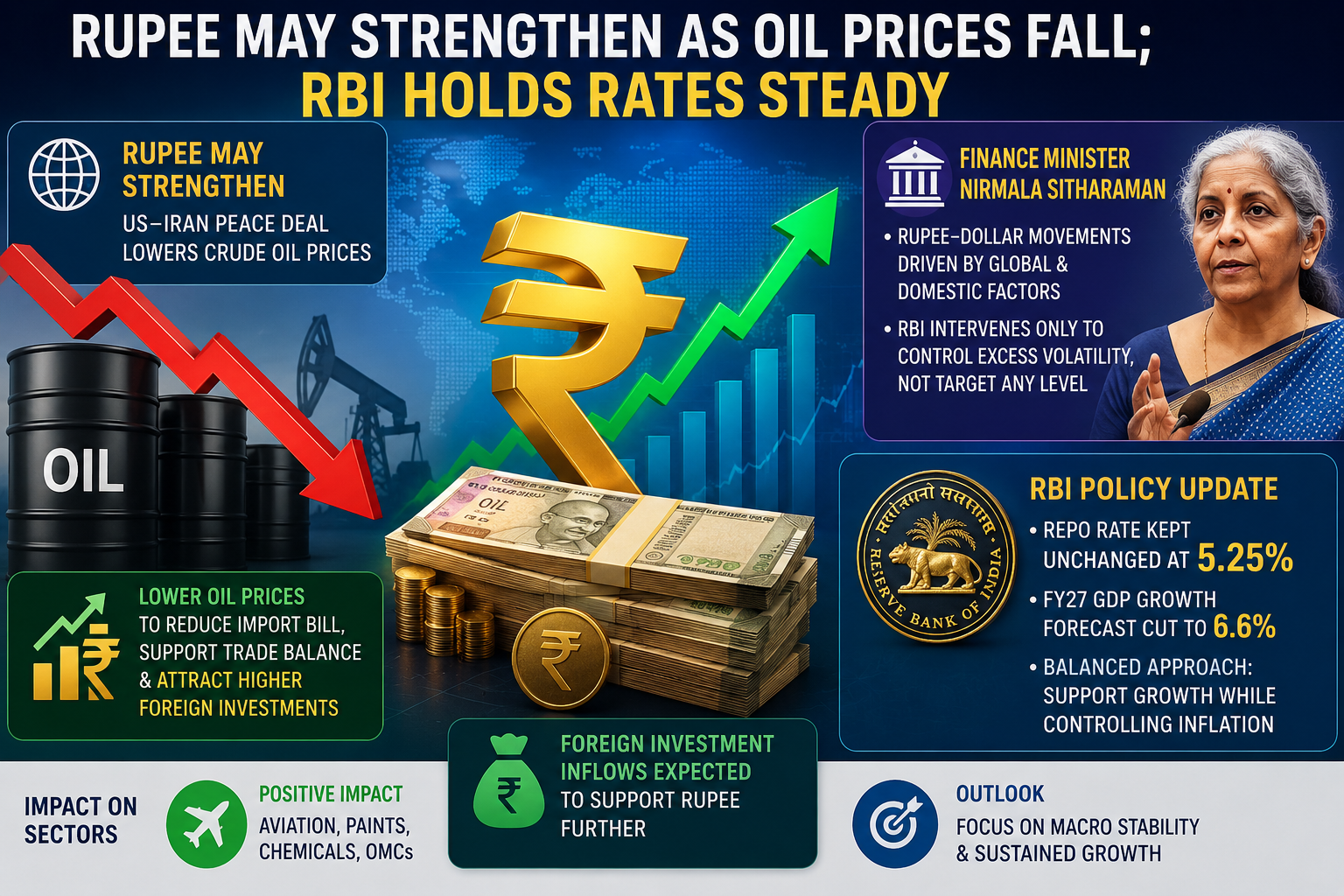
The decline in oil prices could have significant implications for the global economy. Lower crude prices generally help reduce transportation and manufacturing costs, easing inflationary pressures that have challenged central banks worldwide. For countries such as India, which import a large portion of their energy needs, softer oil prices can improve the trade balance, support the rupee, and reduce fuel-related inflation. Businesses and consumers may also benefit from lower energy costs, potentially boosting economic activity.
Financial markets have responded positively to the development, with investors viewing lower oil prices as supportive for corporate earnings and consumer spending. While energy-sector stocks may face pressure due to reduced revenue expectations, sectors such as aviation, logistics, automobiles, and consumer goods could benefit from lower input costs. Going forward, market participants will closely monitor developments in the Strait of Hormuz and broader Middle East geopolitics, as any renewed disruption could quickly alter the supply outlook and trigger fresh volatility in oil markets.