
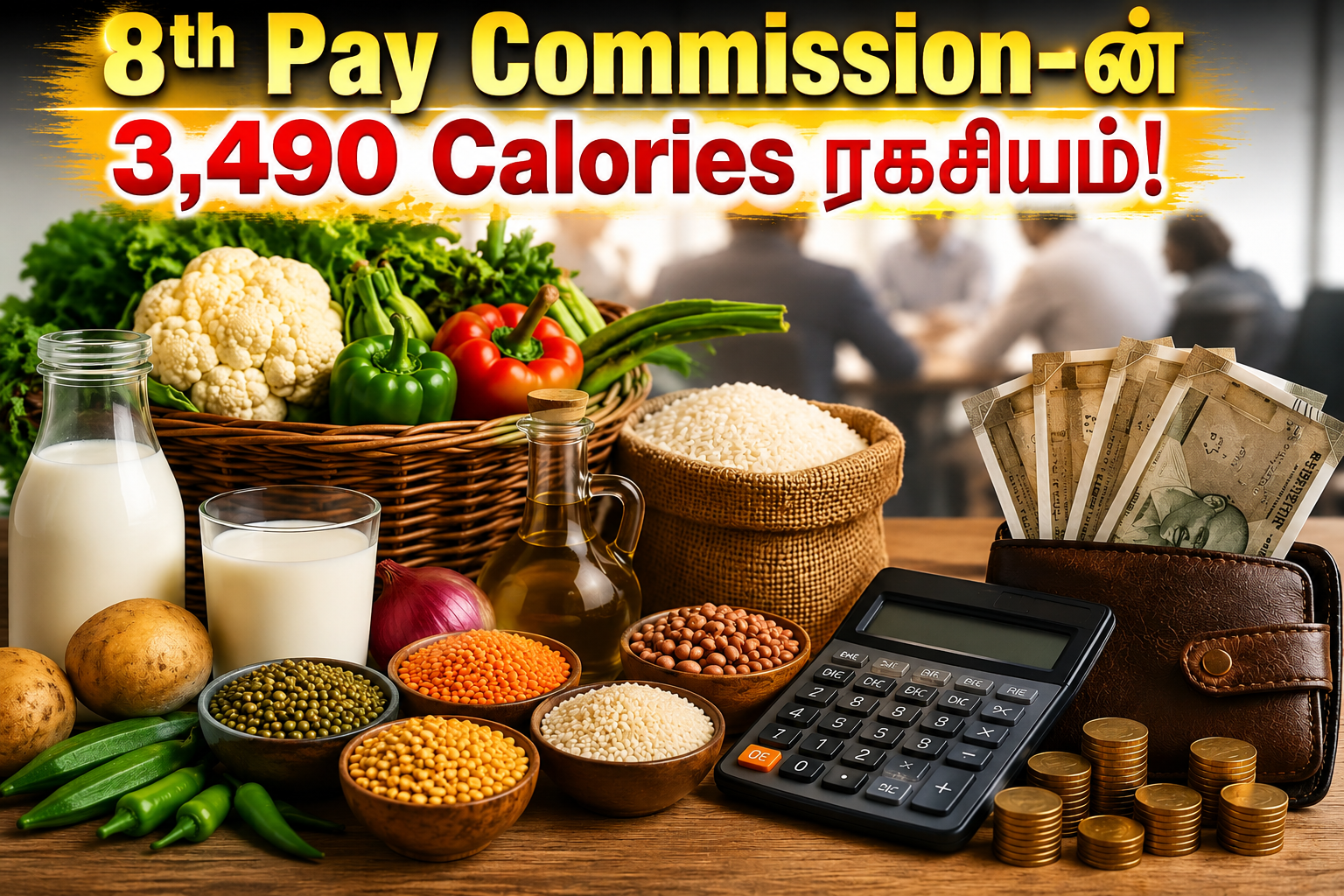
The upcoming 8th Pay Commission is expected to play a major role in determining the salaries and pensions of millions of central government employees and retirees. One of the most discussed concepts in the current negotiations is the “3,490-calorie formula,” a proposal that could significantly impact the calculation of minimum wages and future pay revisions.
What Is the 3,490-Calorie Formula?
Traditionally, Pay Commissions have used the cost of maintaining a minimum standard of living as a benchmark for determining wages. Earlier calculations were based on a daily nutritional requirement of around 2,700 calories per worker.
However, employee unions now argue that this benchmark is outdated. Based on updated nutritional recommendations and changing living conditions, they have proposed a requirement of 3,490 calories per day for a working individual. This higher calorie benchmark reflects the actual food and energy needs of modern households.
The logic is simple:
➡️ Higher calorie requirement
➡️ Higher food consumption
➡️ Higher monthly household expenses
➡️ Higher minimum salary requirement
Why Do Milk and Vegetable Prices Matter?
The 8th Pay Commission is not looking only at basic food grains like rice and wheat. Modern wage calculations increasingly consider the cost of maintaining a balanced diet and a reasonable standard of living.
Key items being considered include:
- Milk and dairy products
- Vegetables and fruits
- Pulses and proteins
- Cooking oil
- Eggs, fish, and meat
- LPG cylinders
- Healthcare expenses
- Education costs
- Transportation expenses
If the prices of these essential goods rise significantly, the minimum income required to support a family also increases. As a result, the recommended salary levels may need to be adjusted upward.
Family Size Is Also Under Discussion
Another important issue is the size of the family unit used in salary calculations.
Previous Pay Commissions often assumed a smaller household size. Employee organizations now argue that salary calculations should reflect the realities of modern Indian families, where employees frequently support spouses, children, and elderly parents.
A larger family unit naturally results in higher estimated living costs, strengthening the case for higher pay scales.
Why Are Unions Demanding a Higher Minimum Salary?
Government employee associations believe that current living costs have increased substantially due to inflation and rising prices of essential goods.
Using updated food costs, family expenditure patterns, and living standards, unions have proposed a significantly higher minimum basic salary under the 8th Pay Commission. Their argument is that wages should reflect the real cost of maintaining a dignified standard of living in today’s economy.
Potential Impact on Employees and Pensioners
If the recommendations based on the 3,490-calorie formula are accepted, the impact could extend beyond basic pay.
Possible benefits may include:
- Higher Basic Pay
- Increased Dearness Allowance (DA)
- Higher House Rent Allowance (HRA)
- Improved Pension Benefits
- Better Retirement Benefits
This could result in a substantial increase in overall compensation for central government employees and pensioners.