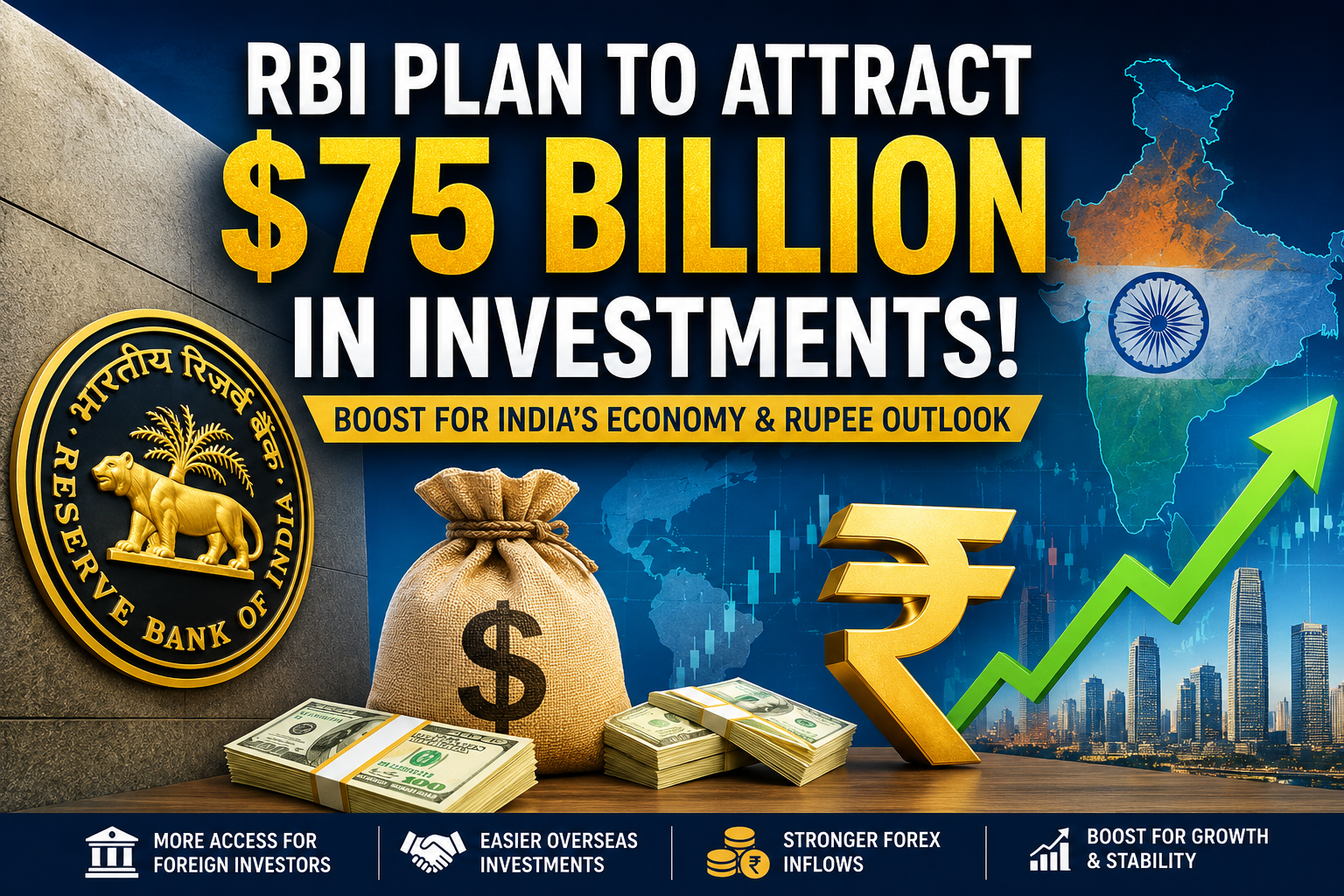
The Reserve Bank of India (RBI) has unveiled a set of strategic measures aimed at attracting foreign capital into the country, a move that economists believe could bring between $50 billion and $75 billion in fresh inflows over the coming months. At a time when global markets are grappling with geopolitical tensions, volatile crude oil prices, and uncertainty around interest rates, RBI’s approach focuses on strengthening India’s external position through sustained capital inflows rather than relying solely on foreign exchange reserves to support the rupee. The measures are designed to make Indian debt markets more accessible to foreign investors while encouraging non-resident Indians (NRIs) and overseas borrowers to bring additional funds into the country.
One of the most significant announcements is the expansion of investment opportunities for foreign investors in Indian government securities. By opening more long-term bonds under the Fully Accessible Route (FAR), RBI is making it easier for global funds to invest in India’s debt market. Additionally, the central bank has introduced incentives for banks to mobilize Foreign Currency Non-Resident (Bank) [FCNR(B)] deposits and provided support mechanisms for overseas borrowings by public sector entities. These initiatives are expected to increase the supply of foreign currency in the domestic market, helping India maintain a strong balance of payments position and reducing pressure on the rupee during periods of global volatility.
The announcement has been welcomed by financial markets, with analysts suggesting that stronger capital inflows could provide a significant cushion for the Indian currency. A higher inflow of dollars generally improves liquidity in the foreign exchange market, helping stabilize exchange rate movements and reducing the risk of sharp depreciation. Moreover, increased foreign participation in government bonds can lower borrowing costs, improve market depth, and strengthen investor confidence in India’s economic outlook. This comes at a crucial time when many emerging market currencies are facing challenges from a stronger U.S. dollar and uncertain global economic conditions.
Beyond the currency market, the broader Indian economy could also benefit from these measures. Higher foreign investment can support economic growth by improving access to capital, strengthening financial markets, and enhancing overall investor sentiment. Combined with India’s robust growth prospects, improving infrastructure, and ongoing reforms, RBI’s inflow-focused strategy could reinforce India’s position as one of the most attractive investment destinations among emerging economies. If the projected inflows materialize, they would not only strengthen the rupee but also provide a strong foundation for long-term economic stability and financial resilience.