
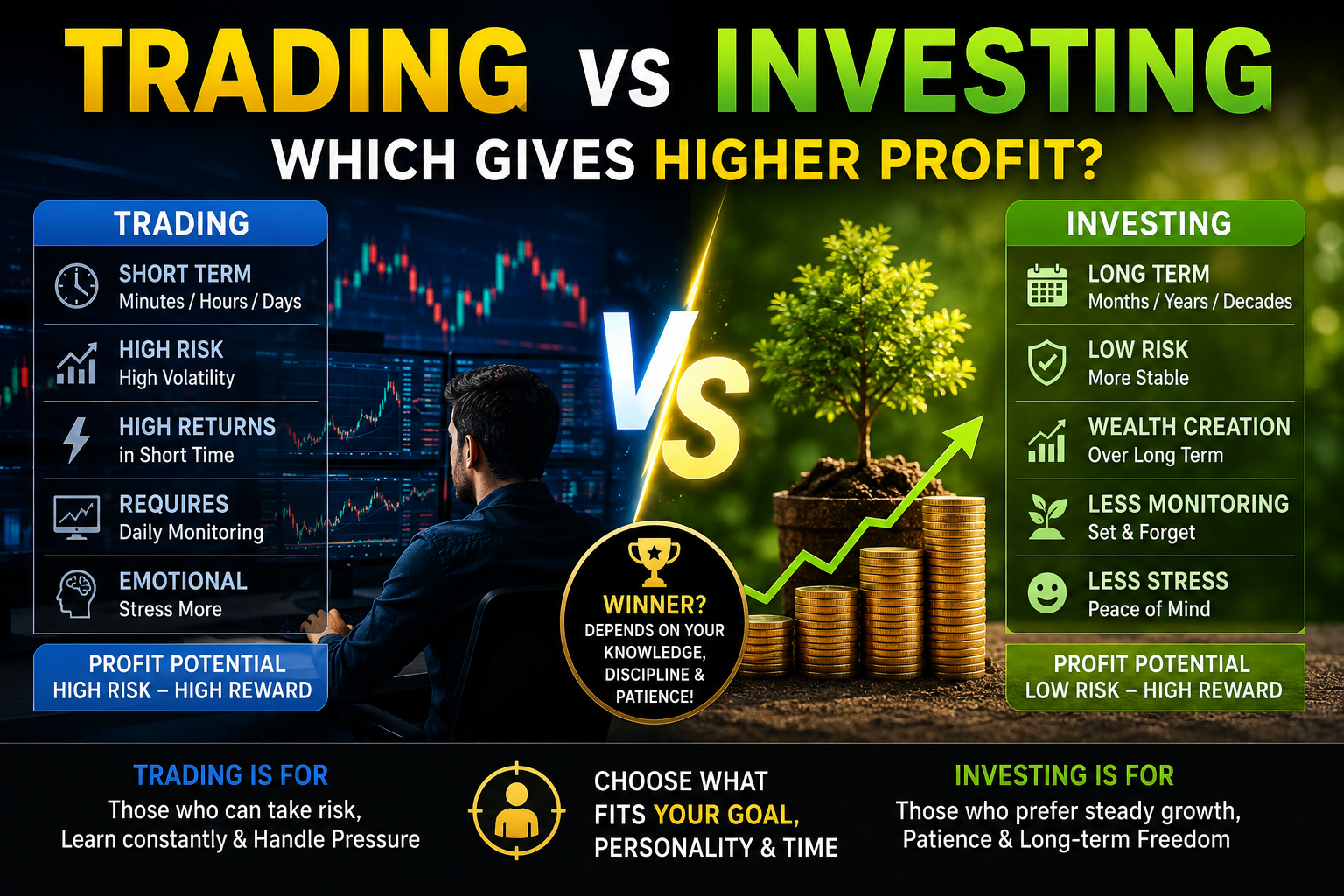
Many people enter the stock market with one dream — to make money quickly. That is why most beginners are attracted to Trading first. The idea of earning profits within a few hours or days looks exciting and powerful. In reality, trading can generate huge returns in a short period of time, but it can also destroy capital just as fast. Trading is not simply about buying and selling stocks; it is a high-pressure activity that depends on psychology, discipline, timing, risk management, technical analysis, and the ability to control emotions during market volatility.
In segments like Intraday Trading, Futures, and Options, thousands of people enter the market hoping for “quick money.” However, only a small percentage of traders consistently make profits over the long term. The market is highly competitive, filled with institutional investors, algorithms, and experienced professionals. Beginners who trade without proper knowledge often make emotional decisions driven by fear or greed. One wrong trade without stop-loss discipline can wipe out weeks or even months of profits. Successful trading requires continuous learning, strict risk control, patience, and years of experience. That is why professional traders treat trading like a business, not gambling.
On the other hand, Investing may appear slower, but it is one of the most powerful wealth-creation methods in the world. Long-term investing in strong companies allows the power of compounding to work over time. Many quality stocks in India and global markets have delivered extraordinary returns over 10 to 20 years. Investors who consistently invested through SIPs and stayed patient during market crashes have created massive wealth over time. Unlike trading, investing does not require constant monitoring of daily market movements. Short-term volatility is normal, but history shows that markets have rewarded patient investors in the long run.
Legendary investor Warren Buffett famously said, “Time in the market is more important than timing the market.” This highlights the core strength of investing — staying invested for years often creates greater wealth than trying to predict short-term price movements. Investing also carries risks, especially when people invest without research or panic during market corrections. However, diversified investing and disciplined long-term strategies are generally considered more stable compared to aggressive trading.
So, which gives higher profits — Trading or Investing? The answer depends entirely on the individual. Trading can offer faster profits, but it also comes with higher risk and emotional pressure. Investing may take more time, but it has historically created sustainable wealth and financial freedom for millions of people. In the end, success in the market does not depend only on strategy. It depends on discipline, consistency, emotional control, patience, and continuous learning.