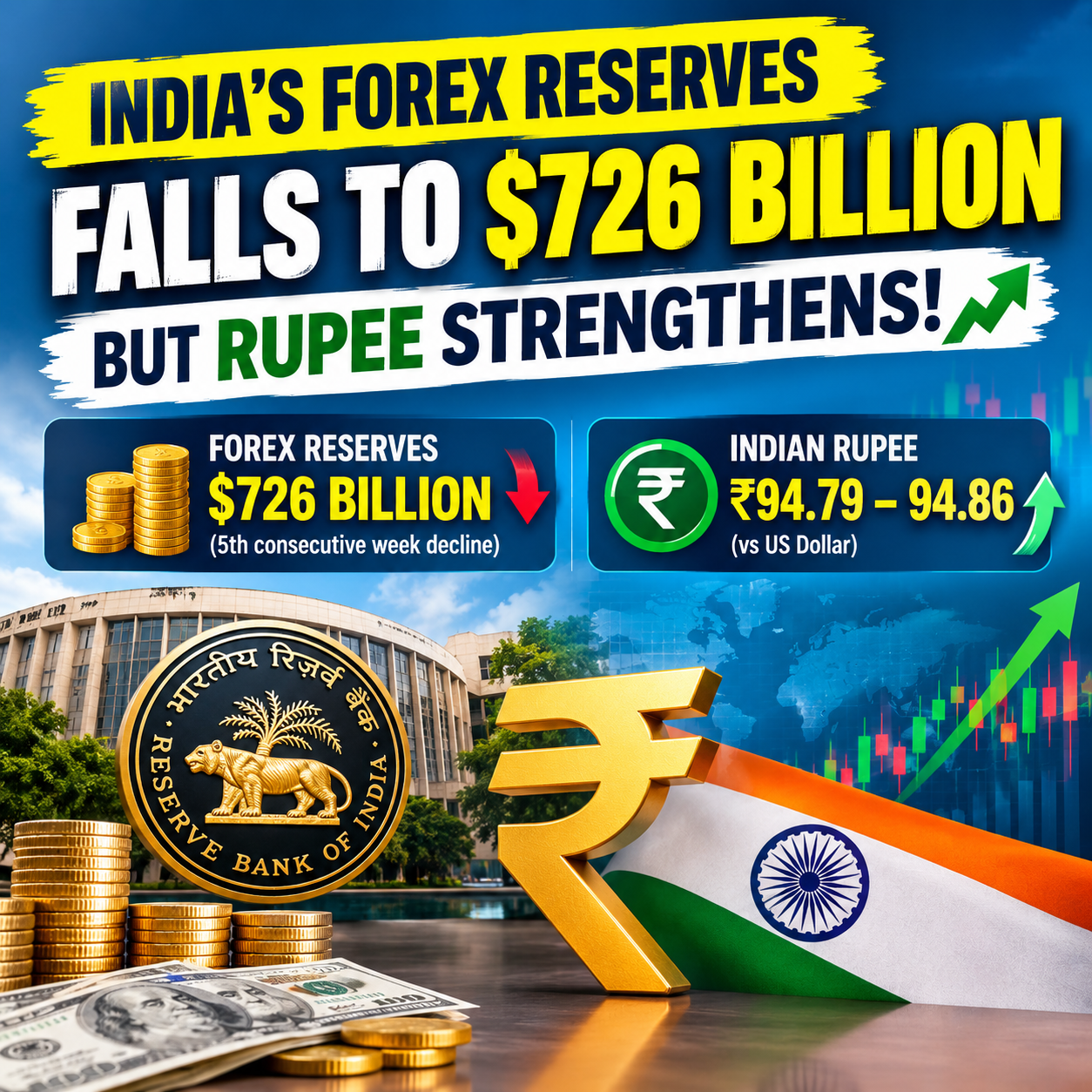
India’s foreign exchange reserves have declined for the fifth consecutive week, reaching approximately $726 billion. Foreign exchange reserves are assets held by the Reserve Bank of India (RBI), mainly in foreign currencies, gold, and other reserve assets. These reserves help India manage external financial risks, meet international payment obligations, and maintain confidence in the economy.
One of the key reasons forex reserves may fluctuate is the RBI’s intervention in the foreign exchange market. When the rupee faces pressure, the RBI may sell US dollars from its reserves to manage excessive volatility. However, changes in foreign currency asset valuations, gold prices, and other factors can also affect the total reserves. Therefore, a decline in reserves does not necessarily mean that India is facing a financial crisis.
Meanwhile, the Indian rupee strengthened slightly, trading around ₹94.79–₹94.86 against the US dollar, according to the figures provided. The rupee’s value is influenced by several factors, including global dollar movements, crude oil prices, foreign investor flows, imports and exports, and market expectations. A stronger rupee can help reduce the cost of importing goods such as crude oil, while a weaker rupee can increase import costs and potentially add to domestic inflation.
For the Indian economy, both forex reserves and the rupee exchange rate are important indicators to watch. Adequate reserves provide a financial cushion against external shocks, while a relatively stable rupee supports businesses, investors, and international trade. However, short-term movements should not be viewed in isolation. Investors and the public should monitor RBI announcements, reserve data, crude oil prices, and global market trends to understand how currency movements may affect India’s economy.