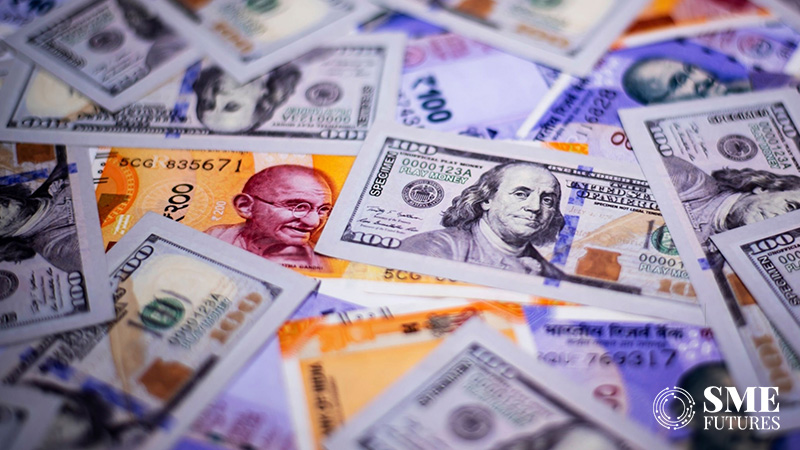

After opening at 90.42 per US dollar, the Indian rupee continues its downward trend, reaching a new, historic low of 90.55. As a result, the currency has dropped by more than 6% during the past year.
In relation to the US dollar, the domestic currency’s opening was 0.06% lower than its previous close of 90.36. The lack of a trade agreement between the US and India, the expected ongoing dollar purchases by Indian corporations, and the continuous withdrawal of foreign stocks from the domestic markets are the main causes of the new historic low of 90.55 against the US dollar. The currency reached a new low after slipping below its previous low of 90.46 from yesterday.
1. Uncertainty around the US-India trade accord
The uncertainty surrounding the US-India trade pact is one of the main factors affecting the rupee. As both nations conclude two days of negotiation, during which the US delegation was in India, the lack of a clear timeline for a trade agreement continues to put pressure on the currency. Analysts have cautioned that if the trade agreement is delayed, the Indian currency will probably drop even more and could cross the 91-level barrier against the US dollar.
2. High-dollar purchases
The rupee has remained under pressure due to the strength of the dollar and aggressive dollar buying. The movement of the rupee was mostly driven by importers’ aggressive dollar purchases. In particular, rising precious metal prices around the world led metal importers to rush for dollars, putting tremendous pressure.
3. Possible RBI interventions as foreign outflows increase
According to FX traders, the RBI probably stepped in yesterday to prevent further severe losses. Over the past five trading sessions, bonds valued at Rs 6,576 crore were sold by foreign portfolio investors. $1.6 billion has been taken out of stocks so far in December. But the RBI’s involvement has been more gradual and constrained in both scope and amount.
4. FII withdrawals
According to the NSE’s preliminary statistics for December 11, shares valued at Rs 2,020.94 crore were net sold by foreign institutional investors (FII). Conversely, domestic institutional investors (DII) purchased shares valued at Rs 3,796.07 crore. The ongoing international outflow is contributing to the local currency’s decline.