The Reserve Bank of India (RBI) stated on Monday that new US trade investigations and the military war in the Middle East, which was sparked by combined US and Israeli assaults on Iran, have raised volatility in international financial markets.
In its State of the Economy report, the central bank stated that the global economic outlook, “which was already in a state of flux before the recent events,” would be seriously threatened by an extended period of war and high levels of uncertainty. Nonetheless, it pointed out that India’s foreign exchange reserves are still sufficient to protect against shocks from the outside world.
“The Indian economy continues to be resilient, according to the second advance estimates of GDP for FY26. In February, high-frequency indications show that economic activity is picking up steam. According to the RBI bulletin, “system liquidity has remained comfortable, and the total flow of financial resources to the commercial sector rose, with financing increasing from both bank and non-bank sources.”
For FY26, the second advance estimate predicted GDP growth of 7.6%, which was higher than the first advance estimate’s 7.4% prediction. The government’s creation of the Economic Stabilization Fund, which would further provide fiscal headroom and a cushion to proactively respond to global headwinds, was commended in the study.
According to the research, India has improved its domestic refining capacity and diversified its sources of crude oil imports. The opinions expressed in the article are those of the authors and may not necessarily reflect the RBI’s official stance.
Following the US-Israel attacks on Iran, which caused a severe disruption in oil supplies through the Strait of Hormuz, a crucial chokepoint managing around 20% of the world’s oil trade, the battle grew more intense. In recent trading sessions, Brent crude prices have risen from above $100 per barrel to almost $114 per barrel.
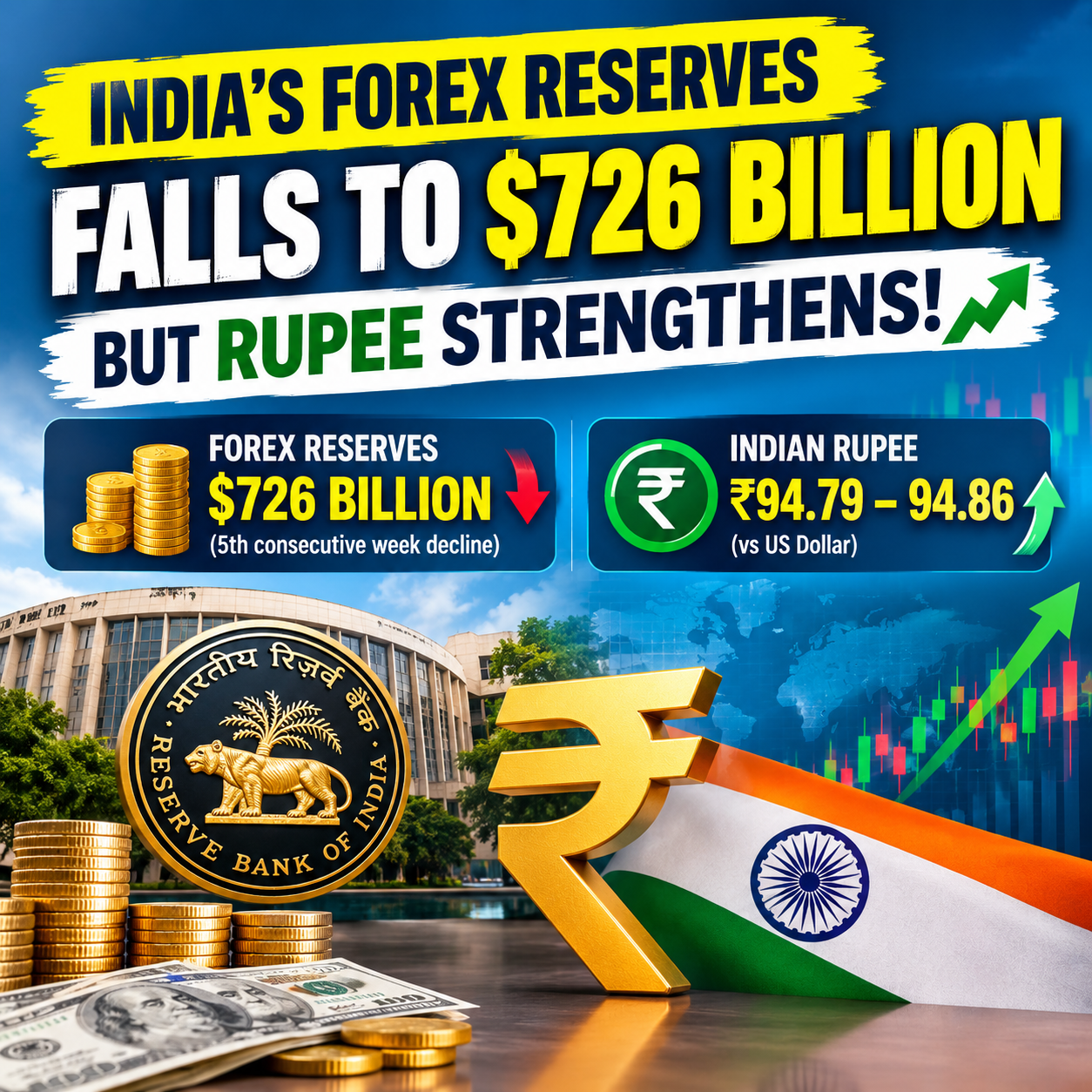
It also confirmed that India still has enough foreign exchange reserves to protect it from outside threats. Reserves totaled $709.8 billion as of March 13.