
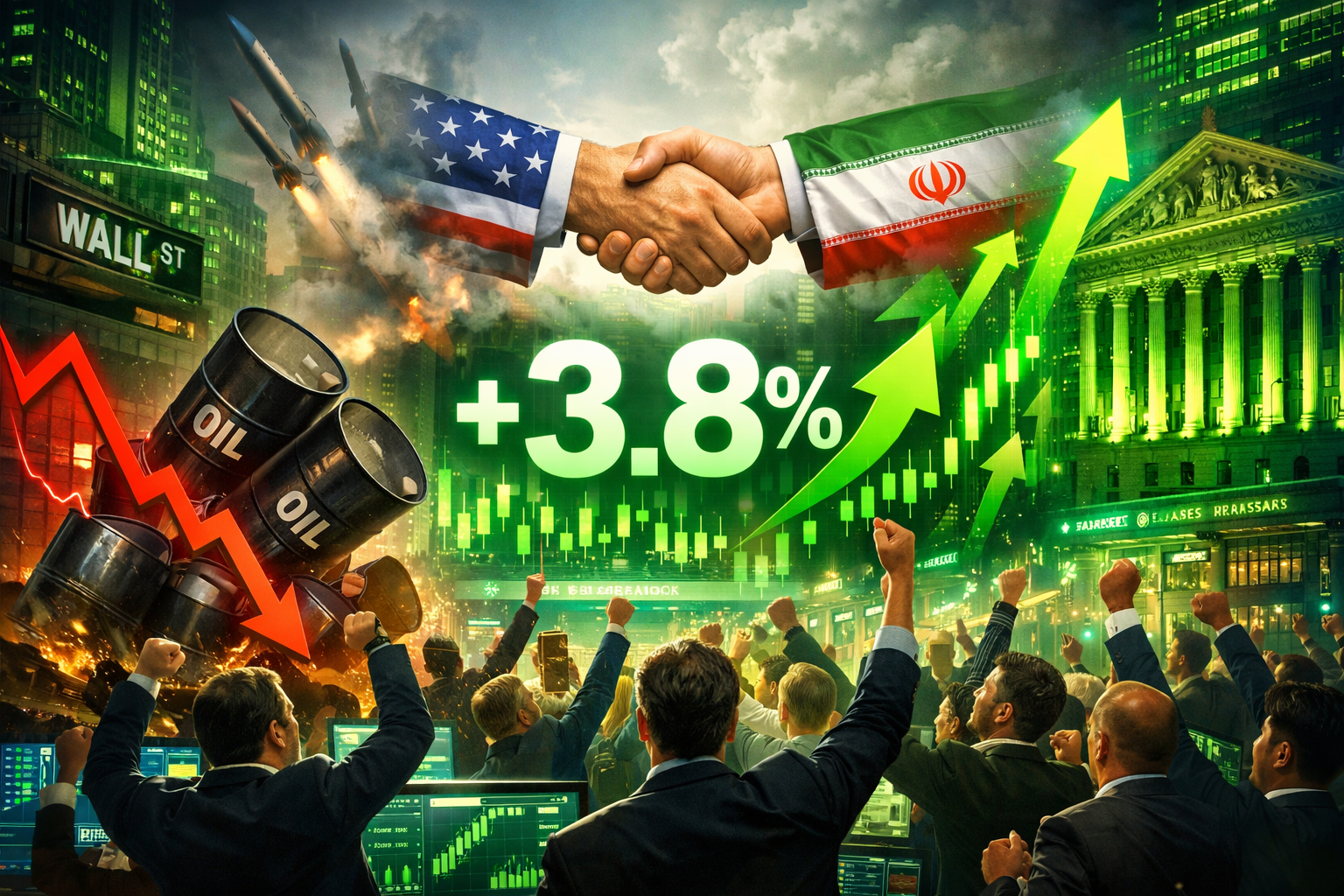
Following the sudden announcement of a ceasefire between Iran and the United States, global tensions subsided abruptly. Consequently, investors regained confidence and began investing in the stock market once again. As a result, the Indian stock market witnessed a major rally, surging by over 3.8%. The Sensex climbed 3,739 points to close at 97,437, while the Nifty 50 rose 2,983 points to reach 29,682. Strong buying activity was also observed in Midcap and Smallcap stocks, driving them up by 2–3%.
The primary catalyst for this surge was the sudden decline in crude oil prices. Typically, oil prices tend to rise during times of war or heightened tension. However, with the announcement of the ceasefire, Brent crude fell below $85, and WTI dropped below $80.
Furthermore, the simultaneous rise across global markets—including those in the US, Europe, and Asia—provided additional support to the Indian market. Stock markets in nations such as Japan and South Korea also recorded significant gains. Even the India VIX index, which measures market volatility and fear, declined by approximately 20%.
Concurrently, the price of gold—traditionally viewed as a safe-haven asset—also declined; as geopolitical tensions eased, investors began shifting their capital out of safe-haven assets and back into equities. All in all, this single geopolitical development has served as a major positive catalyst—not only for the Indian market but for the global economy as a whole.