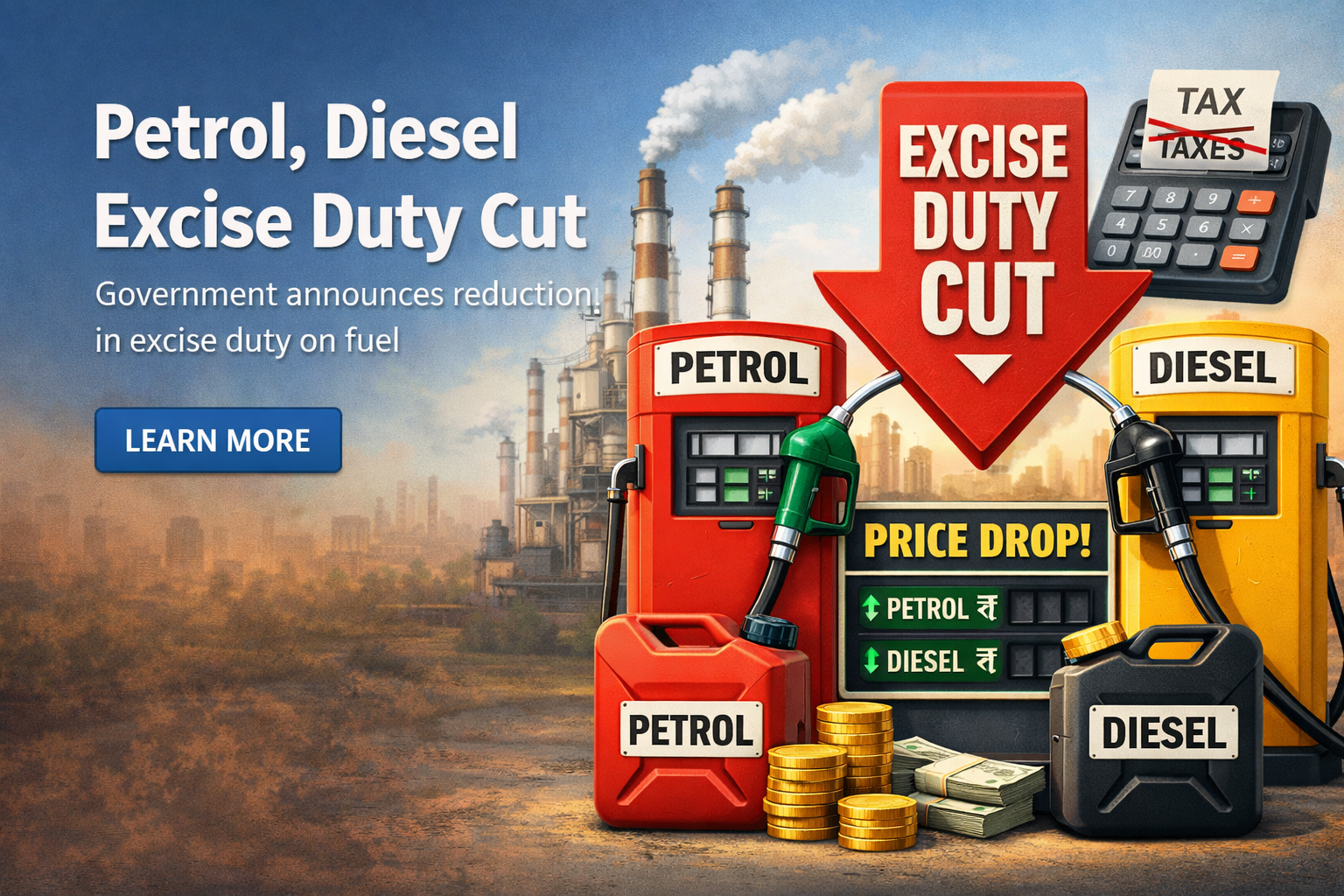
Due to the ongoing US-Israeli war on Iran and Tehran’s efforts to limit shipping via the Strait of Hormuz, the government has lowered the special supplementary excise charges on gasoline and diesel in the midst of the world oil crisis.
The excise tax on petrol has been lowered from Rs 13 to Rs 3 per litre, according to a Reuters report. Diesel’s excise tax has been reduced from Rs 10 per litre to zero.
It is anticipated that the tax drop will lower the nation’s gas and diesel prices. With an estimated 40–50% of India’s oil imports—roughly 2.2–2.8 million barrels per day traditionally traveling through the corridor, it is an essential supply route.
Approximately 20–25 million barrels of crude and over 10 billion cubic feet of gas per day passed through the Strait of Hormuz before to the conflict, making it a crucial global energy conduit.
The largest private fuel retailer in the nation, Nayara Energy, sharply raised fuel prices before the government’s action. It increased the cost of diesel by Rs 3 and gasoline by Rs 5 per litre. Two people with firsthand knowledge of the situation told news agency PTI that Nayara Energy, which runs 6,967 of India’s 102,075 gas stations, chose to pass on a portion of the rise in input prices to customers.
Fuel merchants in India have been under pressure because retail prices for gasoline and diesel have not moved despite a substantial increase in global crude prices, which have risen by about 50% since February 28, when US-Israeli strikes on Iran raised tensions and disrupted oil markets.
India has enough petroleum supplies for the next sixty days, according to the oil ministry on Thursday. The interruptions brought on by the closing of the Strait of Hormuz have been countered by increased purchases from Western sources.
The government also reported that all refineries are operating at more than 100% capacity and that Indian oil companies have already secured crude oil supplies for the next 60 days. “There is no supply gap,” the government declared.